Training PrincipleAll Levels
Progressive Overload
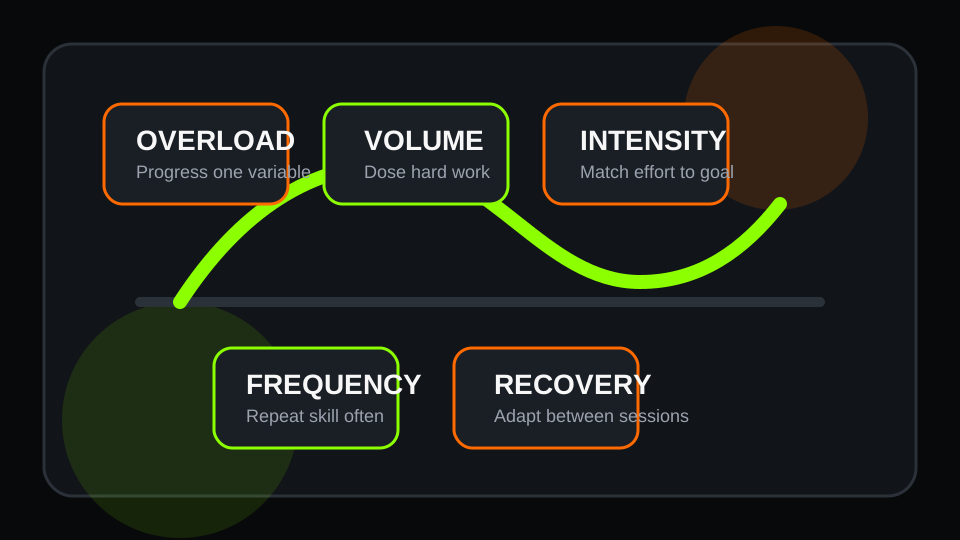
Gradually increase training demand through reps, load, range, tempo, sets, or density while technique stays reliable.
Key points
- Keep the principle tied to a clear training goal.
- Track enough information to know whether the plan is working.
- Progress one major variable at a time before adding complexity.
Do not use any training principle to justify pushing through sharp pain, worsening symptoms, poor technique, or inadequate recovery.
View full Medical DisclaimerTraining PrincipleAll Levels
Periodization
Organize training into blocks so volume, intensity, exercise focus, and recovery are planned instead of random.
Key points
- Keep the principle tied to a clear training goal.
- Track enough information to know whether the plan is working.
- Progress one major variable at a time before adding complexity.
Do not use any training principle to justify pushing through sharp pain, worsening symptoms, poor technique, or inadequate recovery.
View full Medical DisclaimerTraining PrincipleAll Levels
Linear Progression
Use simple repeatable increases, often by adding reps or load each session or week until progress needs more planning.
Key points
- Keep the principle tied to a clear training goal.
- Track enough information to know whether the plan is working.
- Progress one major variable at a time before adding complexity.
Do not use any training principle to justify pushing through sharp pain, worsening symptoms, poor technique, or inadequate recovery.
View full Medical DisclaimerTraining PrincipleIntermediate to Advanced
Undulating Periodization
Rotate rep ranges, intensity, or emphasis across days or weeks while keeping variation planned and measurable.
Key points
- Keep the principle tied to a clear training goal.
- Track enough information to know whether the plan is working.
- Progress one major variable at a time before adding complexity.
Do not use any training principle to justify pushing through sharp pain, worsening symptoms, poor technique, or inadequate recovery.
View full Medical DisclaimerTraining PrincipleAll Levels
Training Volume
Manage the total amount of work performed, often counted as hard sets, reps, time, or distance.
Key points
- Keep the principle tied to a clear training goal.
- Track enough information to know whether the plan is working.
- Progress one major variable at a time before adding complexity.
Do not use any training principle to justify pushing through sharp pain, worsening symptoms, poor technique, or inadequate recovery.
View full Medical DisclaimerTraining PrincipleAll Levels
Training Intensity
Match load, effort, speed, or proximity to failure to the training goal and recovery capacity.
Key points
- Keep the principle tied to a clear training goal.
- Track enough information to know whether the plan is working.
- Progress one major variable at a time before adding complexity.
Do not use any training principle to justify pushing through sharp pain, worsening symptoms, poor technique, or inadequate recovery.
View full Medical DisclaimerTraining PrincipleAll Levels
Training Frequency
Plan how often a movement, muscle group, or training quality is practiced across the week.
Key points
- Keep the principle tied to a clear training goal.
- Track enough information to know whether the plan is working.
- Progress one major variable at a time before adding complexity.
Do not use any training principle to justify pushing through sharp pain, worsening symptoms, poor technique, or inadequate recovery.
View full Medical DisclaimerTraining PrincipleAll Levels
Hypertrophy
Build muscle through enough hard sets, useful exercises, progressive tension, food, and recovery.
Key points
- Keep the principle tied to a clear training goal.
- Track enough information to know whether the plan is working.
- Progress one major variable at a time before adding complexity.
Do not use any training principle to justify pushing through sharp pain, worsening symptoms, poor technique, or inadequate recovery.
View full Medical DisclaimerTraining PrincipleAll Levels
Strength Training
Improve force production through skill practice, progressive loading, bracing, recovery, and specific exercise practice.
Key points
- Keep the principle tied to a clear training goal.
- Track enough information to know whether the plan is working.
- Progress one major variable at a time before adding complexity.
Do not use any training principle to justify pushing through sharp pain, worsening symptoms, poor technique, or inadequate recovery.
View full Medical DisclaimerTraining PrincipleAll Levels
Deload Weeks
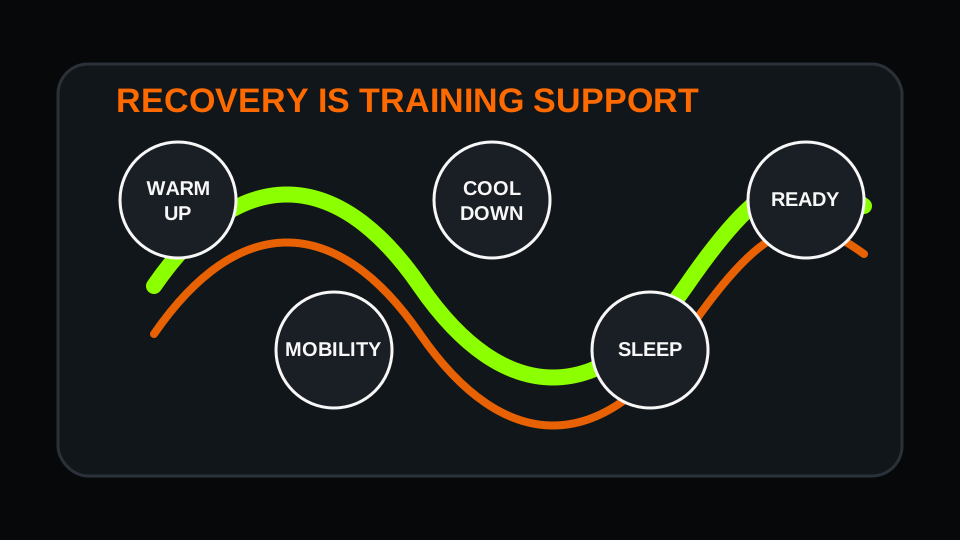
Reduce training stress so fatigue can drop while routine and movement practice stay intact.
Key points
- Keep the principle tied to a clear training goal.
- Track enough information to know whether the plan is working.
- Progress one major variable at a time before adding complexity.
Do not use any training principle to justify pushing through sharp pain, worsening symptoms, poor technique, or inadequate recovery.
View full Medical DisclaimerTraining PrincipleAll Levels
Recovery
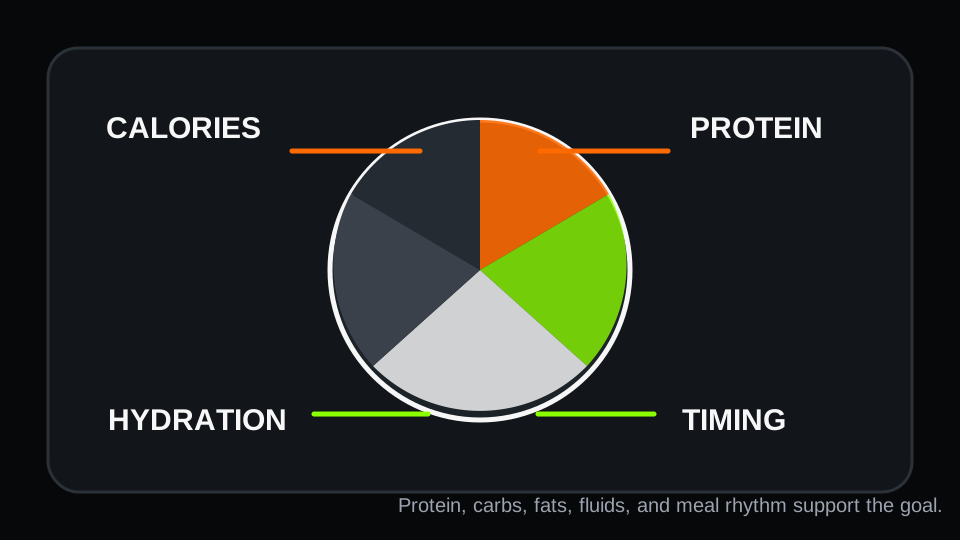
Support adaptation with sleep, food, hydration, stress management, easy movement, and time between hard sessions.
Key points
- Keep the principle tied to a clear training goal.
- Track enough information to know whether the plan is working.
- Progress one major variable at a time before adding complexity.
Do not use any training principle to justify pushing through sharp pain, worsening symptoms, poor technique, or inadequate recovery.
View full Medical DisclaimerTraining PrincipleAll Levels
Mobility
Build controllable movement through useful ranges for training, sport, and daily activity.
Key points
- Keep the principle tied to a clear training goal.
- Track enough information to know whether the plan is working.
- Progress one major variable at a time before adding complexity.
Do not use any training principle to justify pushing through sharp pain, worsening symptoms, poor technique, or inadequate recovery.
View full Medical DisclaimerTraining PrincipleAll Levels
Flexibility
Improve available range of motion with patient stretching and position practice that stays controlled.
Key points
- Keep the principle tied to a clear training goal.
- Track enough information to know whether the plan is working.
- Progress one major variable at a time before adding complexity.
Do not use any training principle to justify pushing through sharp pain, worsening symptoms, poor technique, or inadequate recovery.
View full Medical DisclaimerTraining PrincipleAll Levels
Core Stability
Train the trunk to control position, resist motion, breathe, and transfer force.
Key points
- Keep the principle tied to a clear training goal.
- Track enough information to know whether the plan is working.
- Progress one major variable at a time before adding complexity.
Do not use any training principle to justify pushing through sharp pain, worsening symptoms, poor technique, or inadequate recovery.
View full Medical DisclaimerTraining PrincipleAll Levels
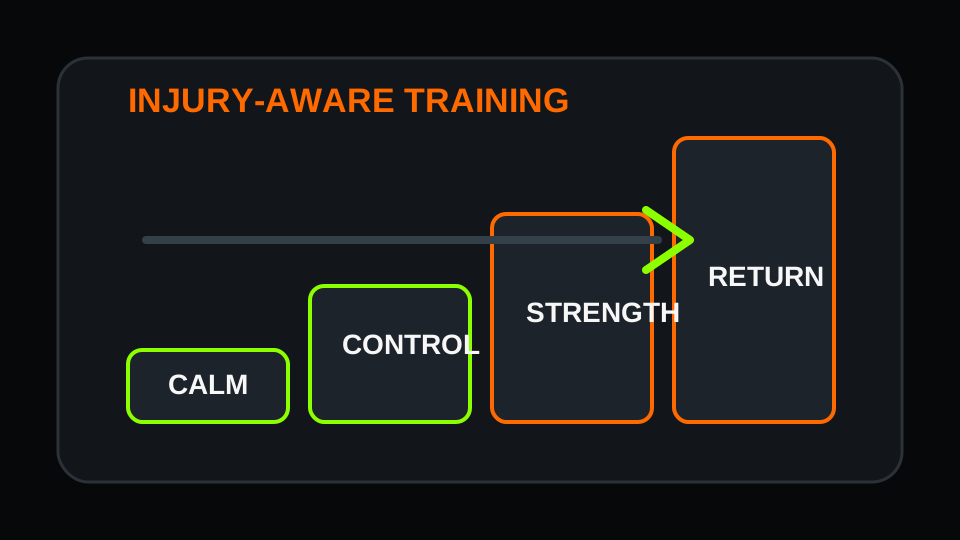
Injury-Aware Training
Use conservative exercise choices, symptom monitoring, professional-care prompts, and gradual return-to-training concepts.
Key points
- Keep the principle tied to a clear training goal.
- Track enough information to know whether the plan is working.
- Progress one major variable at a time before adding complexity.
Do not use any training principle to justify pushing through sharp pain, worsening symptoms, poor technique, or inadequate recovery.
View full Medical DisclaimerTraining PrincipleBeginner
Beginner Progression
Build consistency, technique, basic strength, aerobic base, mobility, and confidence with simple repeatable plans.
Key points
- Keep the principle tied to a clear training goal.
- Track enough information to know whether the plan is working.
- Progress one major variable at a time before adding complexity.
Do not use any training principle to justify pushing through sharp pain, worsening symptoms, poor technique, or inadequate recovery.
View full Medical DisclaimerTraining PrincipleIntermediate to Advanced
Advanced Progression
Use deliberate volume, intensity, exercise rotation, specialization blocks, deloads, and recovery monitoring.
Key points
- Keep the principle tied to a clear training goal.
- Track enough information to know whether the plan is working.
- Progress one major variable at a time before adding complexity.
Do not use any training principle to justify pushing through sharp pain, worsening symptoms, poor technique, or inadequate recovery.
View full Medical Disclaimer